This City’s Pink Buildings Are Straight Out of a Dream
You know that feeling when you turn a corner and suddenly everything looks like it’s glowing? That’s Toulouse. I didn’t expect to fall head-over-heels for a city just because of its color, but here we are. The pink-hued architecture, sun-kissed walls, and centuries-old charm make every street feel like a curated photo op. If you’re chasing beauty with soul, this is it—no filters needed. The warmth of the brick, the softness of the light, and the rhythm of life unfolding in cobbled squares come together to create a destination that feels both timeless and deeply inviting. Toulouse doesn’t dazzle with glittering skyscrapers or manicured plazas. Instead, it draws you in with quiet confidence, revealing its magic slowly, brick by brick.
First Impressions: The “Pink City” That Actually Lives Up to the Hype
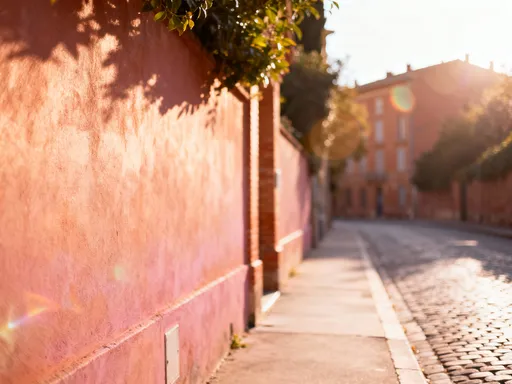
Toulouse greets you with a blush. As you step out of the train station or begin your walk from the city center, the first sight of its terracotta brick buildings bathed in southern French light feels like stepping into a watercolor painting. The city’s signature hue comes from locally sourced clay bricks, baked in the sun and used for centuries in construction. These aren’t painted pink—they are pink by nature, their warm rose tones deepening as the sun climbs and softening into peachy golds at dusk. The phenomenon is not a marketing gimmick or a fleeting trend; it is the essence of the city’s identity. Known as La Ville Rose, or “The Pink City,” Toulouse wears its nickname with pride, and it’s one of the few places where a poetic label is not only accurate but deeply rooted in history and geography.
The visual impact is immediate and lasting. Unlike cities where architecture feels imposing or cold, Toulouse exudes warmth—both literal and emotional. The brick absorbs sunlight throughout the day, radiating it back gently into the streets. Even on overcast mornings, the buildings retain a soft glow, their texture catching whatever light is available. This is a city that feels alive, where the built environment responds to nature in real time. For visitors, especially those traveling with family or seeking a peaceful urban escape, the atmosphere is calming. There’s no rush, no noise that overwhelms—just the steady hum of café chatter, bicycle bells, and the occasional church bell marking the hour.
Arriving on foot from the Matabiau train station, you’ll notice how quickly the city wraps you in its embrace. The walk into the historic core takes about 15 minutes, but it’s one of the most rewarding introductions to any European city. Along the way, pink facades rise on either side, interrupted only by green shutters, ivy-covered archways, and the occasional pop of geraniums in window boxes. The streets slope gently, revealing new perspectives with every turn. By the time you reach the Place du Capitole, you’re already under Toulouse’s spell—drawn in not by grand monuments, but by the quiet harmony of color, light, and human scale.
Capitole de Toulouse: Where Power Meets Aesthetic Grandeur
At the heart of the city stands the Capitole de Toulouse, a building that embodies the city’s ability to balance authority with elegance. This is not just a government seat—it’s a cultural centerpiece, a gathering place, and one of the most photographed landmarks in southern France. The neoclassical façade, completed in the 18th century, rises with quiet confidence, its cream-and-rose stone columns and pediments glowing in the afternoon sun. The grand staircase spills into the vast Place du Capitole, a public square that pulses with life. Musicians play near the fountain, children chase pigeons, and locals sip coffee at outdoor tables, all under the watchful presence of the Capitole’s symmetrical wings.
What makes the Capitole so compelling is its dual role. By day, it houses the city council and administrative offices; by evening, it transforms into a stage for concerts, festivals, and light projections. The building’s interior is equally impressive, with gilded salons, intricate frescoes, and the grand Salle des Illustres, where portraits of Toulouse’s historical figures line the walls. While interior access may require planning, the exterior offers endless photographic opportunities. The reflection of the façade in the square’s fountain during golden hour creates a mirror image that feels almost surreal. Even in winter, when the square hosts a small ice rink, the Capitole remains the focal point, its warm tones standing in soft contrast to the cooler seasonal decorations.
For visitors, the best time to experience the Capitole is late afternoon, when the sun hits the façade at a low angle, emphasizing the texture of the stone. As daylight fades, the building is gently illuminated, its details emerging in a soft wash of light. This is also when the square comes alive with a different energy—families strolling, couples pausing for photos, and street performers adding melody to the air. There’s a sense of shared ownership here, a feeling that this space belongs to everyone. It’s not a museum piece behind velvet ropes; it’s a living part of daily life, where politics, culture, and community intersect in the most beautiful way possible.
Basilique Saint-Sernin: A Romanesque Masterpiece You Can’t Miss
A short walk from the Capitole, the Basilique Saint-Sernin stands as a testament to medieval craftsmanship and spiritual endurance. This UNESCO World Heritage site is one of the largest remaining Romanesque buildings in Europe, and its presence is both solemn and uplifting. Constructed between the 11th and 13th centuries, the basilica was a key stop on the Camino de Santiago pilgrimage route, welcoming travelers on their journey to Spain. Its thick walls, rounded arches, and harmonious proportions speak to a time when architecture was designed to inspire awe and provide shelter—not just for the body, but for the soul.
The exterior is a study in symmetry and rhythm. Rows of arches climb the nave, punctuated by small rose windows and sturdy pillars. The bell tower, rising above the rooftops, serves as a landmark visible from many parts of the city. But it’s the play of light that truly brings the basilica to life. In the morning, the eastern façade catches the first rays, turning the brick into a radiant orange-pink. By midday, the shadows deepen, highlighting the texture of centuries-old stonework. For photographers, the northwest corner offers the best angle, where the curve of the apse meets the surrounding square, creating a natural frame.
Inside, the atmosphere shifts. The air is cooler, the light filtered through stained glass and high clerestory windows. The nave stretches long and steady, its barrel vault echoing with quiet footsteps and whispered prayers. Unlike some grand cathedrals that feel distant or formal, Saint-Sernin invites contemplation. Benches are available, and visitors are welcome to sit, reflect, or simply absorb the stillness. The ambulatory around the choir, once used by pilgrims, now offers a peaceful circuit, its chapels housing relics and centuries-old carvings. For families, it’s a place where children can learn about history and faith in a gentle, non-dogmatic way.
Just outside, the surrounding streets—Rue du Taur and Rue des Changes—retain the same medieval layout, their narrow lanes lined with pink brick and half-timbered houses. A morning visit to the basilica, before the tour groups arrive, offers a rare moment of intimacy with the past. The combination of architectural grandeur and human scale makes Saint-Sernin not just a monument, but a living part of Toulouse’s identity.
Les Ponts: Crossing History with Style
As the Garonne River winds through Toulouse, it carries with it centuries of trade, travel, and transformation. Spanning this ribbon of water are a series of historic bridges, each with its own story and aesthetic charm. Among them, the Pont Neuf—despite its name meaning “New Bridge”—is anything but modern. Built in the 16th century, it replaced earlier wooden structures and has stood as a vital link between the city’s right and left banks for over 400 years. Its stone arches rise with quiet strength, their curves mirrored perfectly in the river’s surface at sunset.
Walking across the Pont Neuf offers one of the most cinematic experiences in Toulouse. From the center of the bridge, you can see the city unfold in both directions—the pink rooftops climbing the hills, the spires of churches piercing the skyline, and the modern tram gliding along the quays. The railing, worn smooth by generations of hands, invites you to pause and take it all in. In the early evening, when the light turns golden and the water becomes a liquid mirror, the scene feels almost dreamlike. Photographers often crouch low to capture the reflection, turning the bridge into a symmetrical composition that blurs the line between reality and image.
But the Pont Neuf is not the only crossing worth exploring. The Pont Saint-Pierre, further upstream, offers a quieter, more intimate perspective. With fewer tourists and more local life—fishermen casting lines, couples strolling at dusk—it feels like a hidden corner of the city. The walk along the Quai de Tounis and Quai Saint-Bernard connects these bridges with tree-lined paths and open viewpoints. These riverbanks are perfect for a leisurely stroll, a family picnic, or a quiet moment with a book. In spring, the plane trees bloom, their leaves filtering the sunlight into dappled patterns on the pavement.
For those interested in history, interpretive panels along the quays explain the role these bridges played in Toulouse’s development—from medieval trade routes to 19th-century industrial expansion. The bridges were not just functional; they were symbols of connection, resilience, and progress. Today, they remain vital arteries, but they also serve as places of pause, reflection, and beauty—a reminder that the simplest structures can carry the weight of centuries.
Hidden Courtyards and Secret Passages: Toulouse’s Quiet Gems
Beyond the grand squares and riverfront promenades, Toulouse reveals its most intimate secrets in its hidden courtyards and narrow passageways. These are the spaces that locals cherish, where the pace slows and the details come into focus. One of the most exquisite is the Courtyard of the Hôtel d'Assézat, a 16th-century Renaissance mansion that now houses the Bemberg Foundation art collection. Behind an unassuming doorway on Rue du Puy, the courtyard unfolds like a private dream—delicate stone carvings, a spiral staircase, and a central well surrounded by arches. The pink brick here is softer, more refined, its texture enhanced by centuries of weathering.
Unlike the bustling Place du Capitole, this space feels suspended in time. The sound of the city fades, replaced by the soft echo of footsteps and the occasional rustle of leaves. Even on a busy afternoon, the courtyard remains a sanctuary. Visitors are welcome to explore, though quietly, as the upper floors host galleries of European paintings and sculptures. The contrast between the opulent interior and the modest exterior is striking—a reminder that in Toulouse, beauty often lies behind closed doors.
Other hidden passages, like the Rue des Tourneurs or the Allées Jules Guesde, offer similar discoveries. These are not tourist traps; they are lived-in spaces where laundry hangs from windows, cats nap on stone steps, and neighbors greet each other by name. Early morning is the best time to visit, when the low sunlight slants across the bricks, creating long shadows and warm highlights. The absence of crowds allows for detailed photography—close-ups of wrought-iron gates, weathered door knockers, or ivy climbing a centuries-old wall.
For the mindful traveler, these quiet corners offer a deeper connection to the city. They are not about ticking off landmarks, but about noticing—the way light changes, how textures evolve, how life unfolds in small, unscripted moments. In a world that often feels rushed and loud, Toulouse’s hidden courtyards remind us that beauty thrives in stillness.
Modern Meets Historic: Contemporary Architecture in Dialogue with Tradition
Toulouse is not frozen in the past. While its historic core remains protected, the city has embraced thoughtful modern development that respects its architectural heritage. Nowhere is this balance more evident than at the Cité de l’Espace, a science and space exploration park on the city’s eastern edge. Here, contemporary design meets educational purpose, with sleek metallic structures housing exhibits on rockets, planets, and the future of space travel. The centerpiece—a full-scale replica of the Ariane 5 rocket—stands in quiet contrast to the pink cityscape, yet it feels like a natural extension of Toulouse’s identity as a hub of aerospace innovation.
More subtle examples can be found in recent urban projects, such as the rehabilitation of the Saint-Anais district or the modern tram stations designed with glass and steel. These structures don’t compete with the historic fabric; instead, they echo its proportions and color palette. Some new buildings incorporate rose-tinted concrete or terracotta panels, creating a visual dialogue between old and new. Even the tram lines, painted in soft pink and white, pay homage to the city’s signature hue.
This intentional blending enhances the city’s visual storytelling. It shows that tradition and progress are not opposites, but partners. For visitors, it means Toulouse feels both authentic and alive—rooted in history, yet open to the future. The contrast between a 12th-century basilica and a 21st-century tram station isn’t jarring; it’s harmonious. It reflects a city that honors its past without being trapped by it, evolving in a way that feels natural and respectful.
Photography Tips & Timing: Capturing Toulouse Like a Pro
To truly capture Toulouse’s magic, timing and technique matter. The city’s beauty is not static—it shifts with the light, the season, and the hour. Golden hour, just after sunrise and before sunset, is when the pink bricks come alive, glowing with an inner warmth. This is the best time for exterior shots of the Capitole, Saint-Sernin, and the bridges. Use a polarizing filter to reduce glare and enhance sky contrast, especially on clear days. For smartphone users, manually adjusting exposure can help preserve detail in bright highlights while keeping shadows rich.
Lens choice depends on your focus. A wide-angle lens (16–35mm) is ideal for capturing full façades and expansive squares, while a 50mm prime lens offers natural perspective for street scenes. For intimate details—carved stonework, window boxes, or reflections—bring a macro lens or use your phone’s portrait mode. Don’t overlook overcast days; the diffused light can be perfect for avoiding harsh shadows and bringing out the subtle variations in the brick.
Seasonally, spring and early autumn offer the most balanced conditions—mild temperatures, soft light, and blooming flowers or golden foliage. Summer brings intense light, so aim for early mornings or late evenings. Winter, while cooler, offers crisp air and fewer crowds, ideal for unhurried exploration.
A recommended self-guided route begins at the Basilique Saint-Sernin, continues through the old town to the Hôtel d'Assézat, then crosses the Pont Neuf toward the Capitole. End with a sunset view from the Quai Saint-Bernard. This path links architectural highlights while allowing time to pause, reflect, and truly see.
Toulouse doesn’t shout for attention—it radiates it. Its architecture tells stories not through grandeur alone, but through harmony, light, and color that seep into your memory. More than just an Instagram moment, it offers a deeper connection between place and perception. Whether you come for the pictures or the peace, you leave changed—still seeing rose.